
Blixt and Vattenfall partner to strengthen grid resilience and flexibility
The energy transition is transforming electricity systems around the world. Electrification of transport and heating, rapid growth of distributed generation, and increasing demand for reliable power are placing new pressures on distribution grids.
To address these challenges, Blixt and Vattenfall Eldistribution have entered into a commercial agreement to bring new levels of resilience, flexibility, and digital control to the electrical grid.
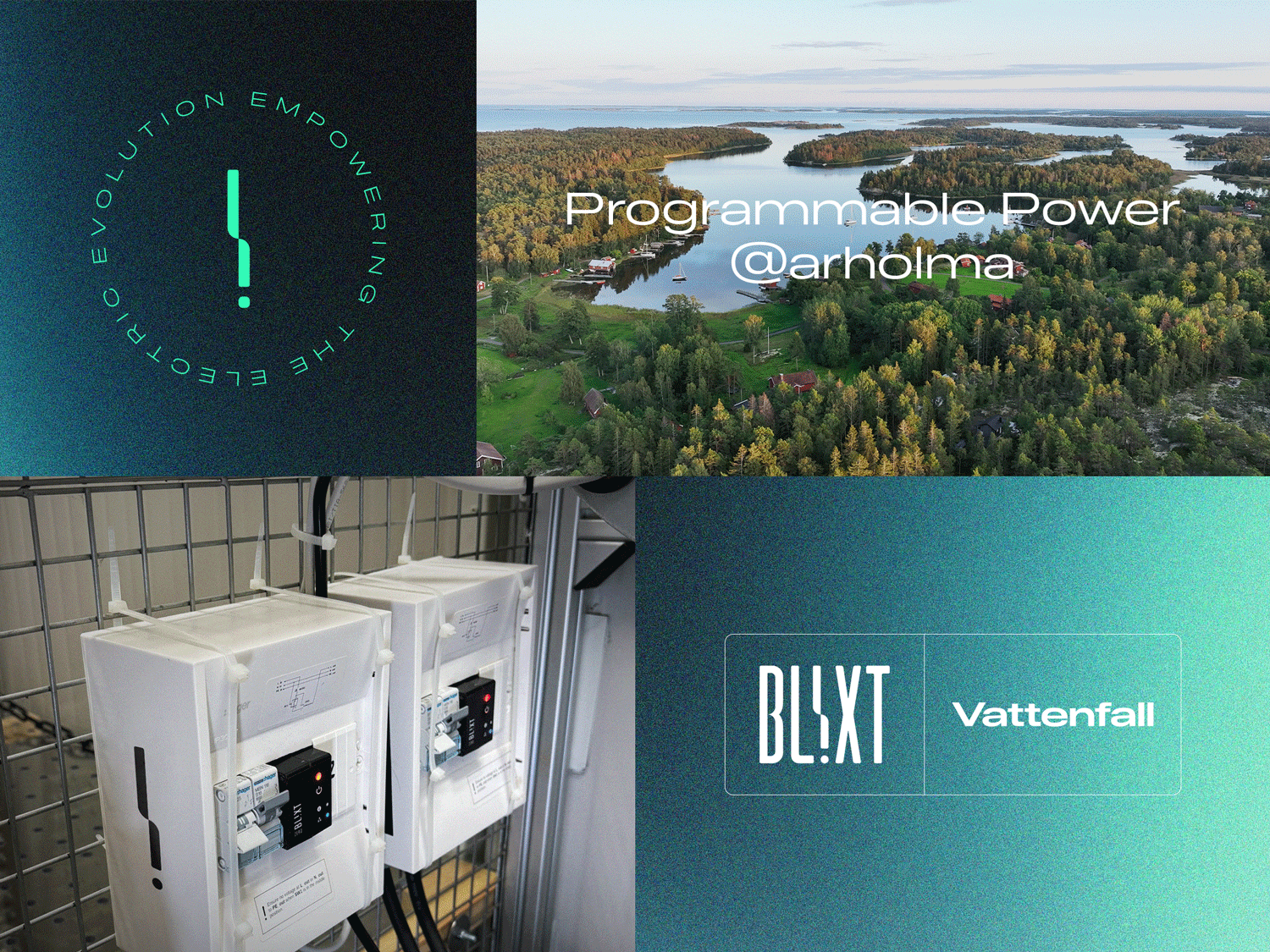
The collaboration builds on the pioneering Arholma microgrid project in the Stockholm archipelago—one of the most advanced demonstrations of how distributed resources, smart control, and flexible demand can strengthen electricity networks.
A new model for grid resilience
Electricity distribution networks were originally designed for predictable, one-directional power flows. Today, however, the system is becoming far more complex.
Distributed solar generation, electrified heating, electric vehicles, and localized storage are transforming the grid into a dynamic ecosystem. At the same time, grid operators must maintain stability and reliability while managing capacity constraints and increasing demand.
The collaboration between Blixt and Vattenfall explores how programmable power technology and customer flexibility can help solve these challenges without requiring extensive physical grid expansion.
By combining Vattenfall’s advanced microgrid architecture with Blixt’s solid-state switching technology, the project enables real-time monitoring and control of loads across the grid. This allows operators to dynamically manage demand, respond quickly to disturbances, and maintain stable operation under changing conditions.
The Arholma microgrid
Located in the Stockholm archipelago, the island of Arholma has become a testing ground for next-generation grid solutions.
The microgrid integrates solar generation, battery storage, and advanced control systems, allowing the island to operate independently from the mainland grid during outages or disturbances.
This ability to operate in island mode significantly increases resilience in remote or vulnerable grid areas. However, operating a microgrid also requires precise management of available capacity to avoid overloads or instability.
To address this, the project integrates flexible customer demand into the grid’s control strategy. Systems such as heat pumps and electric heating can temporarily adjust consumption during critical moments, helping maintain balance between generation and demand.
Bringing Programmable Power to the grid
A key technology enabling this capability is Blixt’s programmable solid-state energy switching platform.
Unlike traditional electromechanical breakers, solid-state switching enables fast, software-defined control of electrical loads. This allows grid operators to monitor conditions in real time and respond instantly when needed.
Programmable power technology enables several critical capabilities:
Real-time monitoring of current, voltage, and frequency
Granular load control at the level of individual devices or homes
Automated protection and rapid response to disturbances
Controlled restart sequences after outages to prevent overload
Dynamic management of local generation and demand
Together, these capabilities allow grid operators to manage electricity flows with much greater precision than traditional infrastructure.
An ecosystem of technology partners
The initiative brings together several innovative companies contributing specialized technologies:
Vattenfall Eldistribution – project lead and distribution system operator
Blixt – programmable solid-state energy switches enabling granular load control
Plexigrid – flexibility management platform coordinating distributed energy resources
Ngenic – smart heat pump and heating optimization technology
Together, the partners demonstrate how digital grid infrastructure and flexible customer demand can strengthen electricity systems while supporting the continued electrification of society.
A blueprint for the future grid
As electricity demand continues to grow, distribution networks will require new tools to manage complexity and maintain reliability.
The collaboration between Blixt and Vattenfall represents an important step toward a more flexible, resilient, and digitally controlled grid—one where distributed resources and customer flexibility become active components of system stability.
Projects like the Arholma microgrid show that the future grid will not rely solely on building more infrastructure. Instead, it will combine advanced hardware, intelligent software, and flexible energy consumption to make the most of existing capacity.
In other words, the electricity system of tomorrow will be smarter, more adaptive, and more resilient by design.
Together we’re Empowering the Electric Evolution.